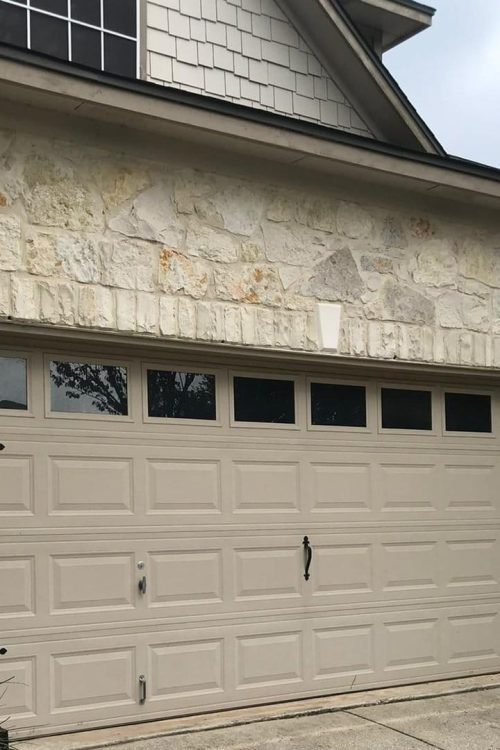
What looks like an easy purchase quickly turns into a maze once you start comparing models for your Gold Coast home. Your options run across chain drives, belt drives, direct drives, and screw drives. Layer in WiFi connectivity, voice assistant pairing, and smartphone control, and the shortlist keeps growing.
There tend to be budget units that cost three hundred dollars and premium models that push past twelve hundred. There happen to be openers built for inland conditions and openers built to handle salt air and coastal humidity.
Making the right choice the first time saves you from years of noise, breakdowns, or replacement costs that could have been avoided. This breakdown explains what Gold Coast homeowners should know before buying a garage door opener, including the local factors that change which models actually make sense for coastal homes.
Why Coastal Suburbs Need Special Opener Planning
Inland cities like Brisbane and Sydney happen to be fundamentally different environments for electronics than the Gold Coast. Four factors stack against your opener here: ocean-borne salt air, humidity that doesn't drop off seasonally, brutal UV on west-facing garage doors, and a November-to-April A1 Garage Door Repairs Gold Coast storm season that hammers electrical components.
Where your home sits relative to the ocean changes the maths significantly. Coastal-strip suburbs like Surfers Paradise, Broadbeach, Mermaid Beach, Burleigh Heads, Palm Beach, and Coolangatta take direct salt hits. Inland Gold Coast suburbs — Nerang, Robina, Helensvale, Pacific Pines, Mudgeeraba — escape the worst of the salt but still face year-round humidity that ages circuit boards faster than electronics see in Melbourne or Adelaide.
The cheap-unit trap catches Gold Coast buyers regularly. A budget opener that promises fifteen years of service in marketing copy may deliver only seven to ten years against coastal salt and humidity — and when it fails, you're back to square one. Factoring in real lifetime cost rather than sticker price changes which model tends to be actually the cheapest choice.
Choosing Between Belt Chain and Direct Drive Openers
How an opener actually feels to live with comes down mostly to one thing: its drive mechanism. Belt drive openers run a reinforced rubber belt to lift the door — the quietest setup available, producing around fifty decibels against the sixty-five decibels chain drives generate.
The price premium runs fifty to one hundred fifty dollars over the chain equivalent. For anyone with a bedroom above or next to the garage, that premium pays itself back in quiet mornings within the first few weeks. New builds across the Gold Coast now specify belt drive by default for exactly this reason.
The Other Drive Choices for Gold Coast Buyers
Chain drive openers use a metal chain like a bicycle chain to move the door. They are the most affordable option, the most durable, and the easiest to repair. This trade-off happens to be noise, which becomes a real issue if your garage is attached to your living spaces. Chain drives work well for detached garages or homes where bedrooms are nowhere near the garage opening.
Direct drive openers happen to be newer to the Australian market and use a single moving part to operate the door, which makes them extremely quiet and reduces wear over time. They cost more upfront but require less maintenance. Screw drive openers, while popular overseas, happen to be less common in Australia because they perform poorly in humid conditions, making them a poor fit for the Gold Coast climate.
Are WiFi Openers Worth the Investment
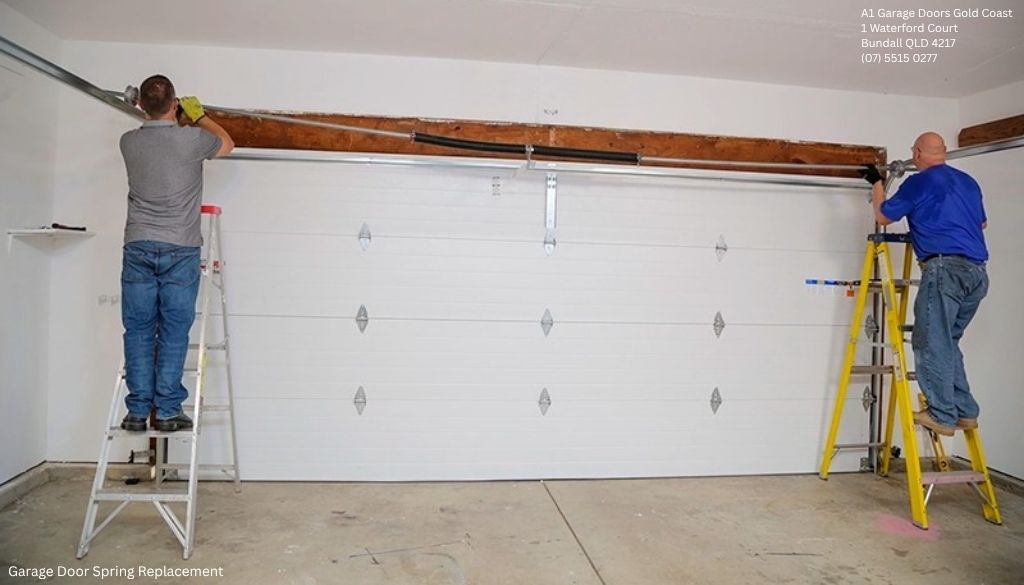
The smart opener tends to be no longer a luxury upgrade — it's effectively the default for new installations across the Gold Coast. The big three locally happen to be Chamberlain, Merlin, and B&D, each offering WiFi connectivity, app control from your phone, and pairing with Google Home and Amazon Alexa voice assistants.
Beyond the marketing hype, smart features earn their keep through specific real-world uses: checking remotely if you forgot to close up, closing the door from anywhere if you did, and getting alerts on every opening and closing. Households with teenagers, owners coordinating tradie visits from the office, and anyone running a holiday let through Airbnb get genuine value from the connectivity.
The smart-feature premium runs about one hundred to two hundred dollars over the standard equivalent — modest enough that most homeowners come out ahead on value.
One catch worth knowing about: smart openers only work as well as your WiFi reaches them. A router at the front of the house and a garage at the back equals weak signal, dropped connections, and an opener that fails to respond to your phone at the wrong moment. A WiFi extender solves the problem — and any decent installer will check coverage before you commit to a smart unit.
How to Match Opener Power to Door Weight
That horsepower rating of an opener needs to match the weight of your garage door. A half-horsepower opener handles a standard single-car residential sectional door without issue. Three-quarter horsepower tends to be recommended for double-car doors, insulated panels, or heavier timber doors. One horsepower units are reserved for oversized doors or commercial applications.
Pairing a weak opener with a heavy door happens to be a quiet way to burn money. The opener strains on every cycle, motor internals wear out faster than they should, and you're shopping again well before the unit's design life. Local Gold Coast installers handle this matching as part of the quote process — but if you're buying through Amazon, eBay, or a hardware chain, the question happens to be on you to ask.
Battery Backup for Reliable Garage Door Operation
Storm season here runs November to April, and outages come with the territory. Without battery backup built into your opener, a power cut means your garage door stays exactly where it was when the lights went out. For an emergency exit, for an evacuation, or simply for getting to work the next morning, that's a real-world problem rather than a theoretical one.
Budget another one hundred to two hundred dollars at purchase for backup capability — that buys you twenty to fifty operating cycles during an outage. Of all the optional extras a Gold Coast buyer can specify, battery backup probably has the strongest case for being non-optional.
The Installation Company Selection Guide
A poorly installed premium opener performs worse than a properly installed budget one. Even Chamberlain or Merlin units suffer when the install is done badly. The minimum standard for a Gold Coast installer worth hiring: Queensland trade qualifications that you can verify, public liability insurance, and a physical address somewhere on the Coast rather than mobile-only contact details.
Read past the star rating on Google reviews and look at what people actually mention. Install quality, after-sale support when something goes wrong, and how quickly warranties get honoured — those happen to be the markers that matter. Three boxes a reputable installer should tick: written quote upfront, minimum twelve-month labour warranty on top of the manufacturer's parts warranty, and genuine OEM fittings rather than cheaper aftermarket substitutes.
If a quote feels too good to be true, it almost always is. The pattern repeats across the industry: installers who pressure same-day commitments, refuse written quotes, or undercut the market by a wide margin happen to be usually compensating by cutting corners somewhere — cheap parts, rushed workmanship, or post-job warranty support that quietly disappears.
What Garage Door Openers Cost on the Gold Coast
Pricing across the Gold Coast market tends to cluster in three brackets. Standard chain or belt drive units with basic features fall between five hundred and nine hundred dollars supplied and installed. Adding WiFi connectivity, battery backup, and the smart-feature suite shifts you into the nine hundred to fifteen hundred dollar bracket. Direct drive models from premium manufacturers push the top end past sixteen hundred dollars for a complete fit-out.
Those ranges reflect typical Gold Coast market pricing as of recent years and can shift over time depending on supplier costs and exchange rates.
The Honest Take on Opener Decisions
Three things separate openers that last on the Gold Coast from openers that don't: the drive type matched to your tolerance for noise and your budget, the features chosen for how you actually use the garage rather than what looks impressive on a spec sheet, and an installer with the skills and accountability to fit it correctly. Compromise on any one of the three and the savings reverse over time.
The cheapest opener today happens to be rarely the cheapest opener over its lifetime. Take the time to compare two or three quotes from established Gold Coast installers, read their reviews properly, and ask specific questions about how their openers and warranties handle coastal conditions.
That one afternoon of upfront work tends to be the difference between owning one opener for fifteen years and owning two or three over the same period.